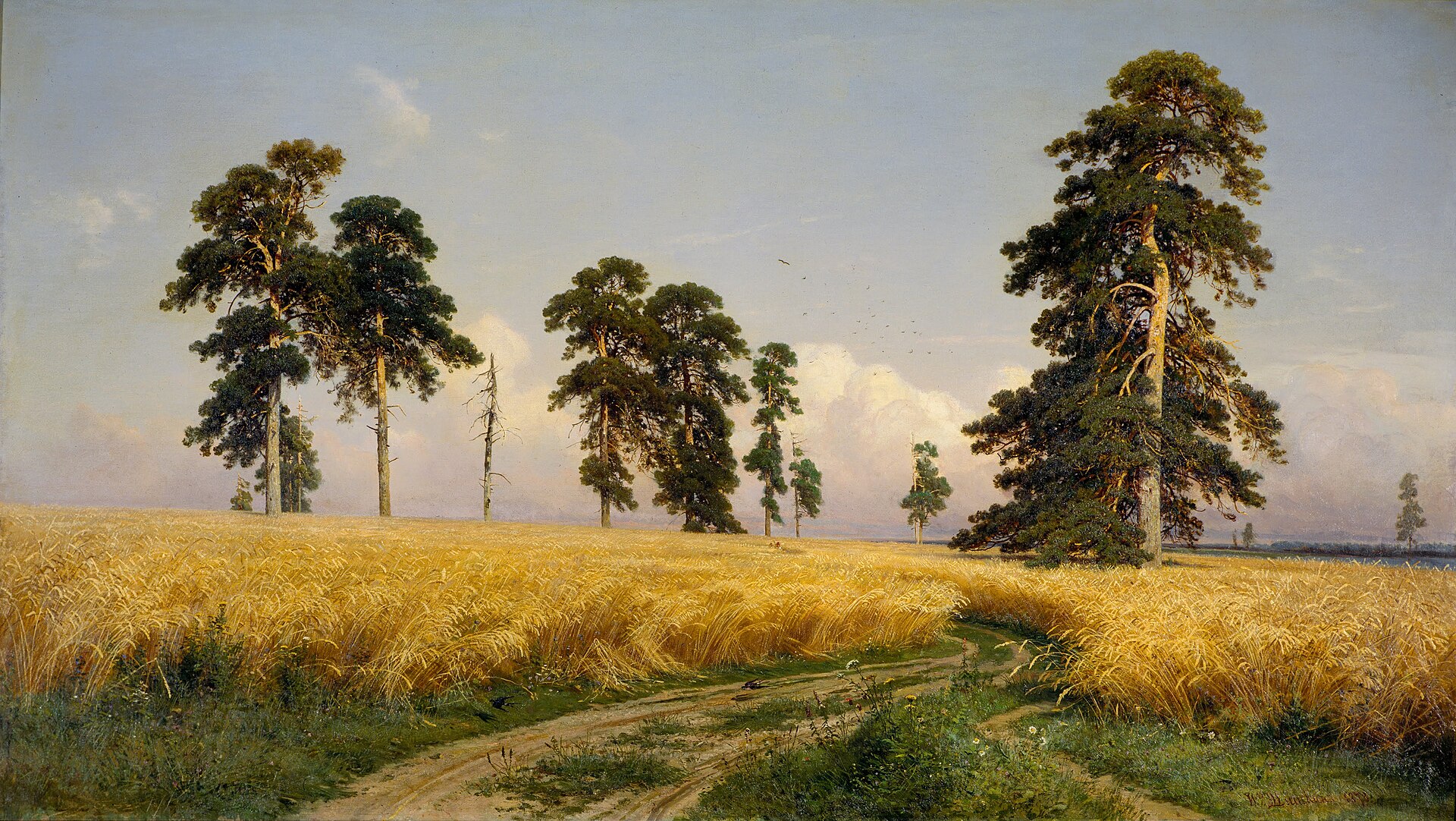
Ivan Shishkin, Rye (1878)

Problems/Probability on finite spaceReviewed

The Monty Hall Paradox

by Nugget·
21
Difficulty scaleÉchelle de difficulté

This score reflects both the level of the required concepts and the difficulty of the solution.Ce score tient compte à la fois du niveau des notions nécessaires et de la difficulté de la résolution.

  1. 110First steps / middle schoolPremiers pas / collège
  2. 1125Beginner / high schoolDébutant / lycée
  3. 2650Intermediate / undergraduateIntermédiaire / licence
  4. 5170Advanced / graduateAvancé / master
  5. 7190Expert / specializedExpert / spécialisé
  6. 91100Research levelNiveau recherche
These levels are approximate guides.Ces niveaux sont des repères approximatifs.
·
English
EnglishFrançais

Consider the following game.
There are 33 doors and a prize is hidden at random behind one of them. A contestant chooses a door, say door 11 for example, but does not open it. Let DiD_i be the event "the prize is behind door ii", for i=1,2,3i = 1,2,3.

1. What is the probability P(Di)P(D_i) of the event DiD_{i} for i=1,2,3i = 1,2,3?

2. The host, who knows where the prize is, opens one of the 2 doors not chosen by the contestant and behind which the prize is not located. Let A2A_2 be the event "the host opens door 2" and A3A_3 the event "the host opens door 3". Calculate the probabilities

P(A2D1),  P(A2D2),  P(A2D3),  P(A3D1),  P(A3D2),  P(A3D3).P(A_2 \mid D_1), \; P(A_2 \mid D_2), \; P(A_2 \mid D_3), \; P(A_3 \mid D_1), \; P(A_3 \mid D_2), \; P(A_3 \mid D_3).

3. Deduce P(D1A2)P(D_1 \mid A_2) and P(D3A2)P(D_3 \mid A_2). Similarly, what are P(D1A3)P(D_1 \mid A_3) and P(D2A3)P(D_2 \mid A_3)?

I solved itMark it doneAdd to my listKeep it in your list

Solutions

0
Report

For an unclear, ambiguous, or possibly incorrect statement, please use the Discussion tab on the right. Report content that needs moderator intervention, such as dangerous, clearly non-mathematical, or plagiarized content.