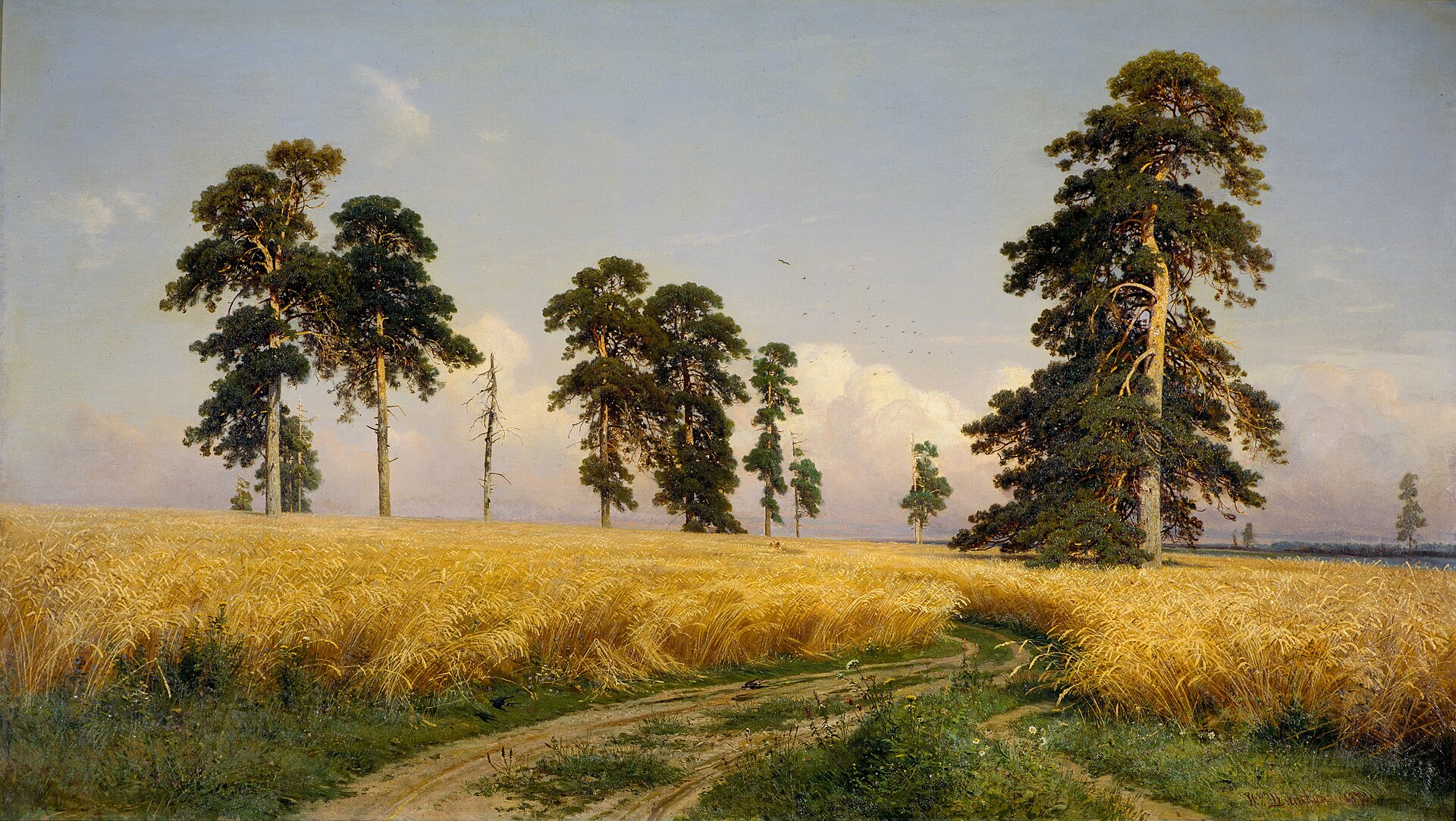

Ivan Shishkin, Rye (1878)

Problems/Number theoryUnreviewedEdited since review

Critère d’Eisenstein

by beignet62·
55
Difficulty scaleÉchelle de difficulté

This score reflects both the level of the required concepts and the difficulty of the solution.Ce score tient compte à la fois du niveau des notions nécessaires et de la difficulté de la résolution.

  1. 1–10First steps / middle schoolPremiers pas / collège
  2. 11–25Beginner / high schoolDébutant / lycée
  3. 26–50Intermediate / undergraduateIntermédiaire / licence
  4. 51–70Advanced / graduateAvancé / master
  5. 71–90Expert / specializedExpert / spécialisé
  6. 91–100Research levelNiveau recherche
These levels are approximate guides.Ces niveaux sont des repères approximatifs.
·
Français
FrançaisEnglish
Unreviewed. This problem changed after its last review and should be reviewed again.

On note P=pnXn+⋯+p1X+p0∈Z[X]P=p_nX^n+\cdots+p_1X+p_0\in\mathbb{Z}[X] un polynôme non constant.

(NB : les pip_i ne sont pas nécéssairement premiers)

Montrer que, s’il existe un nombre premier pp tel que p∣p0,…,pn−1p\mid p_0,\ldots,p_{n-1}, p∤pnp\nmid p_n et p2∤p0p^2\nmid p_0, alors PP est irréductible dans Q[X]\mathbb{Q}[X].

I solved itMark it doneAdd to my listKeep it in your list

Hints

1

Hint 1

Open this only if you want a small nudge before looking at the solutions.

Solutions

1
Reveal solutionsAre you sure? Give it a try first.

Solution by beignet62

Discussions0 useful votes

On suppose que PP n’est pas irréductible sur Q[X]\mathbb{Q}[X], donc sur Z[X]\mathbb{Z}[X].

Il existe donc A,B∈Z[X]A,B\in\mathbb{Z}[X] non constants tels que

P=A×B.P=A\times B.

On utilise les notations

A=∑i=0raiXietB=∑j=0sbjXj.A=\sum_{i=0}^{r}a_iX^i \qquad\text{et}\qquad B=\sum_{j=0}^{s}b_jX^j.

On a

p∣p0=a0b0.p\mid p_0=a_0b_0.

On peut donc supposer, sans perte de généralité, que

p∣a0etp∤b0,p\mid a_0 \qquad\text{et}\qquad p\nmid b_0,

car sinon p2∣p0p^2\mid p_0, ce qui est exclu.

Montrons par l’absurde que pp ne peut pas diviser tous les aia_i.

En effet, si pour tout ii, p∣aip\mid a_i, alors

p∣dom⁡(A)dom⁡(B)=pn,p\mid \operatorname{dom}(A)\operatorname{dom}(B)=p_n,

ce qui est exclu.

On note ainsi i0i_0 le plus petit entier tel que

p∤ai0.p\nmid a_{i_0}.

On a i0<ni_0<n car BB est non constant.

Or,

pi0=ai0b0⏟non divisible par p+ai0−1b1+⋯+a0bi0⏟divisible par p.p_{i_0} = \underbrace{a_{i_0}b_0}_{\text{non divisible par }p} + \underbrace{a_{i_0-1}b_1+\cdots+a_0b_{i_0}}_{\text{divisible par }p}.

En effet, par définition de i0i_0, on a

p∣a0,…,ai0−1,p\mid a_0,\ldots,a_{i_0-1},

et donc tous les termes de la seconde accolade sont divisibles par pp. En revanche,

p∤ai0b0p\nmid a_{i_0}b_0

car p∤ai0p\nmid a_{i_0} et p∤b0p\nmid b_0.

Ainsi,

p∤pi0,p\nmid p_{i_0},

ce qui est absurde puisque i0<ni_0<n et que, par hypothèse,

p∣p0,…,pn−1.p\mid p_0,\ldots,p_{n-1}.

Donc PP est irréductible dans Q[X]\mathbb{Q}[X].

Report

For an unclear, ambiguous, or possibly incorrect statement, please use the Discussion tab on the right. Report content that needs moderator intervention, such as dangerous, clearly non-mathematical, or plagiarized content.