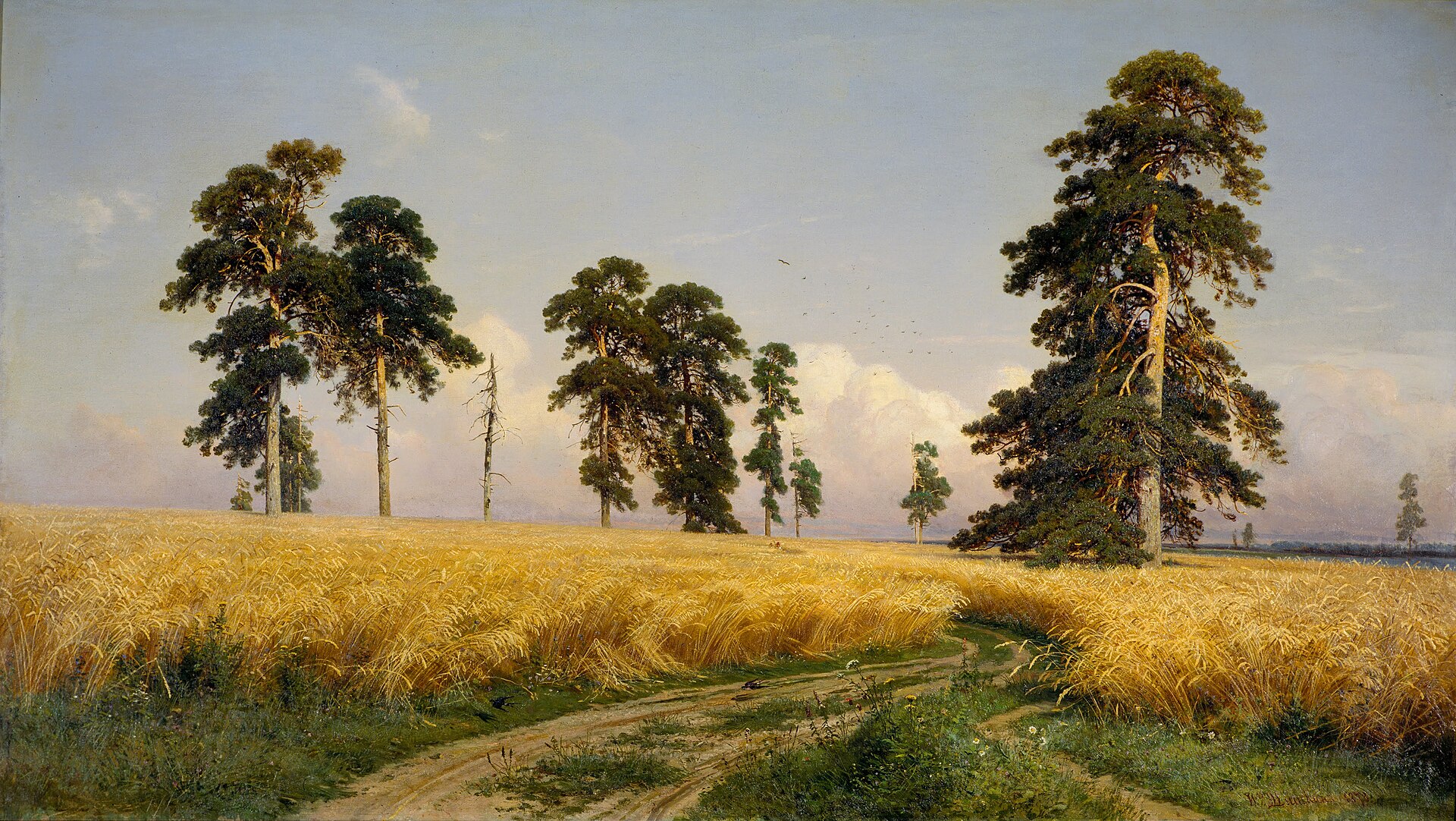
Ivan Shishkin, Rye (1878)

Problems/RingUnreviewedEdited since review

Surjectivité préservée ?

by FiniteField·
35
Difficulty scaleÉchelle de difficulté

This score reflects both the level of the required concepts and the difficulty of the solution.Ce score tient compte à la fois du niveau des notions nécessaires et de la difficulté de la résolution.

  1. 1–10First steps / middle schoolPremiers pas / collège
  2. 11–25Beginner / high schoolDébutant / lycée
  3. 26–50Intermediate / undergraduateIntermédiaire / licence
  4. 51–70Advanced / graduateAvancé / master
  5. 71–90Expert / specializedExpert / spécialisé
  6. 91–100Research levelNiveau recherche
These levels are approximate guides.Ces niveaux sont des repères approximatifs.
·
Français

Showing the Français version because no English translation exists yet. Add that translation.

Unreviewed. This problem changed after its last review and should be reviewed again.
  1. Soit φ ⁣:A→B\varphi \colon A\to B un morphisme d’anneaux surjectif et ψ ⁣:A×→B×\psi\colon A^{\times}\to B^{\times} le morphisme de groupes induit sur les inversibles. Est-ce que ψ\psi est surjectif en général ?
  2. Soient nn et mm deux entiers tels que m∣nm\mid n. Montrer que le morphisme canonique
    (Z/nZ)×→(Z/mZ)×(\mathbb{Z}/n\mathbb{Z})^{\times}\to(\mathbb{Z}/m\mathbb{Z})^{\times}est surjectif.
I solved itMark it doneAdd to my listKeep it in your list

References

Details

Download: BibTeXJSON

Solutions

1
Reveal solutionsAre you sure? Give it a try first.

Solution by FiniteField

Discussions0 useful votes
  1. C’est faux en général. Il suffit de prendre p⩾5p\geqslant 5 n’importe quel nombre premier et Z→Fp\mathbb{Z}\to \mathbb{F}_{p} le morphisme canonique. Les inversibles de Z\mathbb{Z} sont −1-1 et 11 alors que ceux de Fp\mathbb{F}_{p} sont Fp∖{ 0 }\mathbb{F}_{p}\setminus\set{0} donc de cardinal p−1⩾4.p-1\geqslant 4.
  2. On pose n=∏p premierpαpn=\displaystyle\prod_{p\text{ premier}} p^{\alpha_{p}} et m=∏p premierpβpm=\displaystyle\prod_{p\text{ premier}} p^{\beta_{p}} les décompositions en facteurs premiers respectives de nn et mm avec 0⩽βp⩽αp0\leqslant \beta_{p}\leqslant \alpha_{p}. On fixe pp premier et β⩽α\beta\leqslant\alpha et on considère
    πp ⁣:Z/pαZ→Z/pβZ\pi_{p}\colon \mathbb{Z}/p^{\alpha}\mathbb{Z}\to \mathbb{Z}/p^{\beta}\mathbb{Z}la surjection canonique. Un élément k‾\overline{k} de Z/pβZ\mathbb{Z}/p^{\beta}\mathbb{Z} est inversible s’il n’est pas divisible par p.p. La classe [k][k] du représentant kk dans Z/pαZ\mathbb{Z}/p^{\alpha}\mathbb{Z} est alors aussi inversible si bien que πp([k])=k‾\pi_{p}([k])=\overline{k} donc πp\pi_{p} reste surjective sur les inversibles.
    On a donc, par le théorème des restes, des isomorphismes d’anneaux Z/nZ≃∏p premierZ/pαZ\displaystyle\mathbb{Z}/n\mathbb{Z}\simeq \prod_{p\text{ premier}}\mathbb{Z}/p^{\alpha}\mathbb{Z} et Z/mZ≃∏p premierZ/pβZ\displaystyle\mathbb{Z}/m\mathbb{Z}\simeq \prod_{p\text{ premier}}\mathbb{Z}/p^{\beta}\mathbb{Z} si bien que le morphisme canonique se factorise en le produit de trois morphismes d’anneaux qui restent surjectifs sur les inversibles donc il est lui même surjectif sur les inversibles.
Report

For an unclear, ambiguous, or possibly incorrect statement, please use the Discussion tab on the right. Report content that needs moderator intervention, such as dangerous, clearly non-mathematical, or plagiarized content.