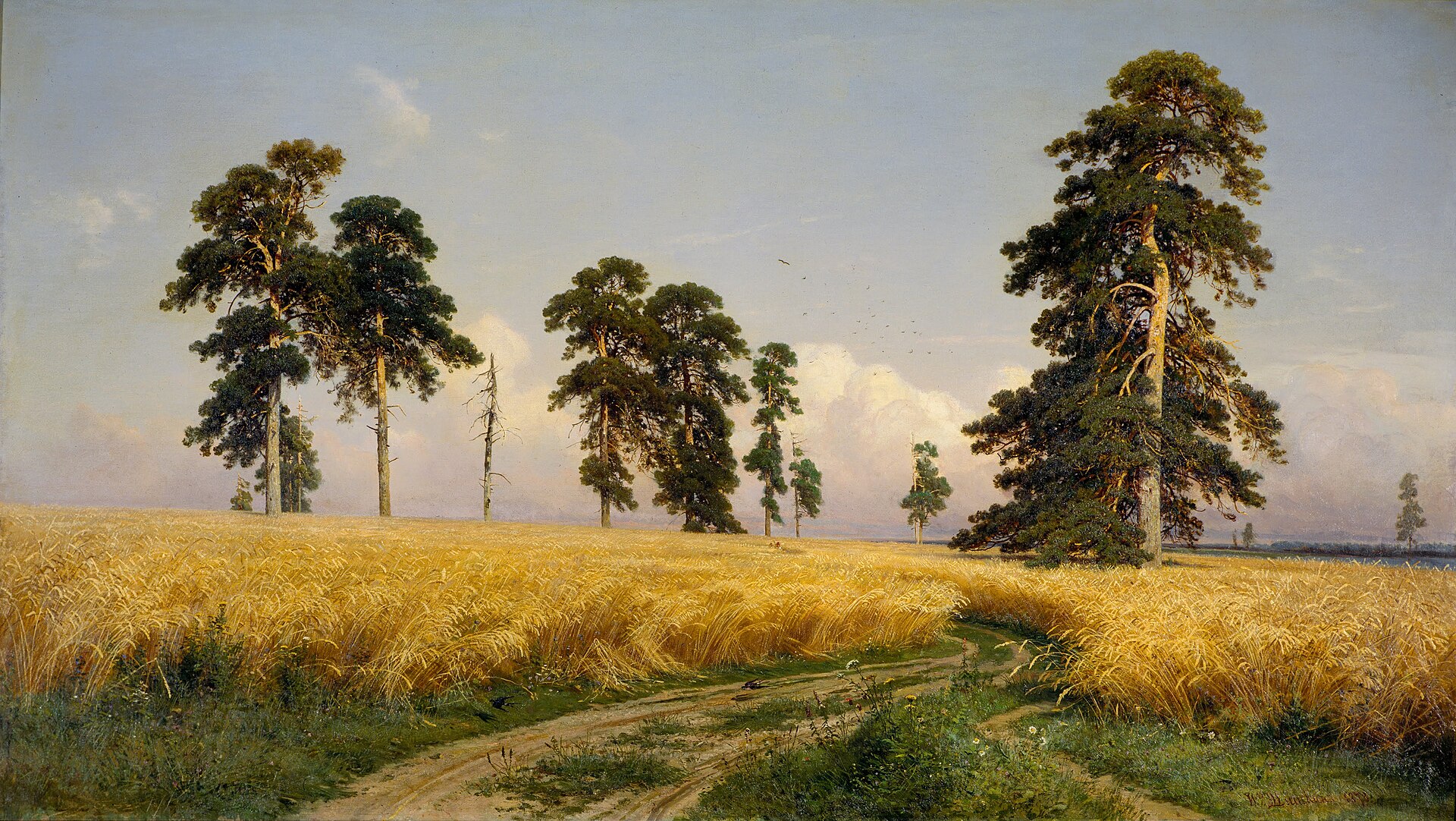
Ivan Shishkin, Rye (1878)

Problems/Number theoryExerciseUnreviewed

Triangle de Pascal et coefficients binomiaux

by Sequoia·
24
Difficulty scaleÉchelle de difficulté

This score reflects both the level of the required concepts and the difficulty of the solution.Ce score tient compte à la fois du niveau des notions nécessaires et de la difficulté de la résolution.

  1. 110First steps / middle schoolPremiers pas / collège
  2. 1125Beginner / high schoolDébutant / lycée
  3. 2650Intermediate / undergraduateIntermédiaire / licence
  4. 5170Advanced / graduateAvancé / master
  5. 7190Expert / specializedExpert / spécialisé
  6. 91100Research levelNiveau recherche
These levels are approximate guides.Ces niveaux sont des repères approximatifs.
·
Français

Showing the Français version because no English translation exists yet. Add that translation.

Unreviewed. This problem has not been reviewed by trusted users yet.

On note an,ka_{n,k} le coefficient du triangle de Pascal à sa nn-ème ligne et kk-ème colonne, où 0kn0\leqslant k\leqslant n.
On cherche ici à montrer que
n,kN/0kn,an,k=(nk).\forall n,k\in\N/\,0\leqslant k\leqslant n, a_{n,k}=\binom{n}{k}.Pour cela, on définit bn,k:=(nk)b_{n,k}:=\binom{n}{k} dont on rappelle que ce coefficient binomial est défini comme bn,k=n!k!(nk)!b_{n,k}=\frac{n!}{k!\,(n-k)!}. On rappelle d’ailleurs la convention 0!=10!=1.

  1. Montrer que bn,0=bn,n=1b_{n,0}=b_{n,n}=1 pour tout nNn\in\N.
  2. Montrer la relation bn+1,k+1=bn,k+1+bn,kb_{n+1,k+1}=b_{n,k+1}+b_{n,k} à partir des factorielles, pour tout 0kn0\leqslant k\leqslant n.
  3. Conclure
I solved itMark it doneAdd to my listKeep it in your list

Solutions

0
Report

For an unclear, ambiguous, or possibly incorrect statement, please use the Discussion tab on the right. Report content that needs moderator intervention, such as dangerous, clearly non-mathematical, or plagiarized content.